Strong Brand Strong Business
How Salomon went from the Alps to the Catwalk without losing brand integrity
Salomon grew 35% and passed $2 billion in sales by taking a ski brand into fashion - without changing the product. The brand-authenticity logic behind it.
Key takeaways
Salomon grew 35%, pushing sales past $2 billion in 2025, and its footwear and apparel now make up 71% of its Outdoor Performance segment, up from 54% in 2022 - what Amer Sports’ CEO calls part of Salomon’s “transformation from its ski equipment heritage.”
Rather than build a separate fashion line, Salomon kept the XT-6’s construction and outsole exactly as it’s designed for trail, and pointed the same product at new cities and new customers.
From product design and development, through to its GTM roll-outs, Salomon matches its messenger to its context, using athletes for performance credibility, and artists and cultural figures for Sportstyle credibility.
Salomon is run as part of a portfolio - one of three core brands leading Amer Sports’ segments (majority owned by the Chinese sportswear group ANTA Sports), so it shares infrastructure while retaining day-to-day control of its own strategy.
The lesson for any brand is to keep its character consistent through every decision - product, place, partner, messenger. The leading characteristic will vary by context, but always as an expression of that single, core identity.
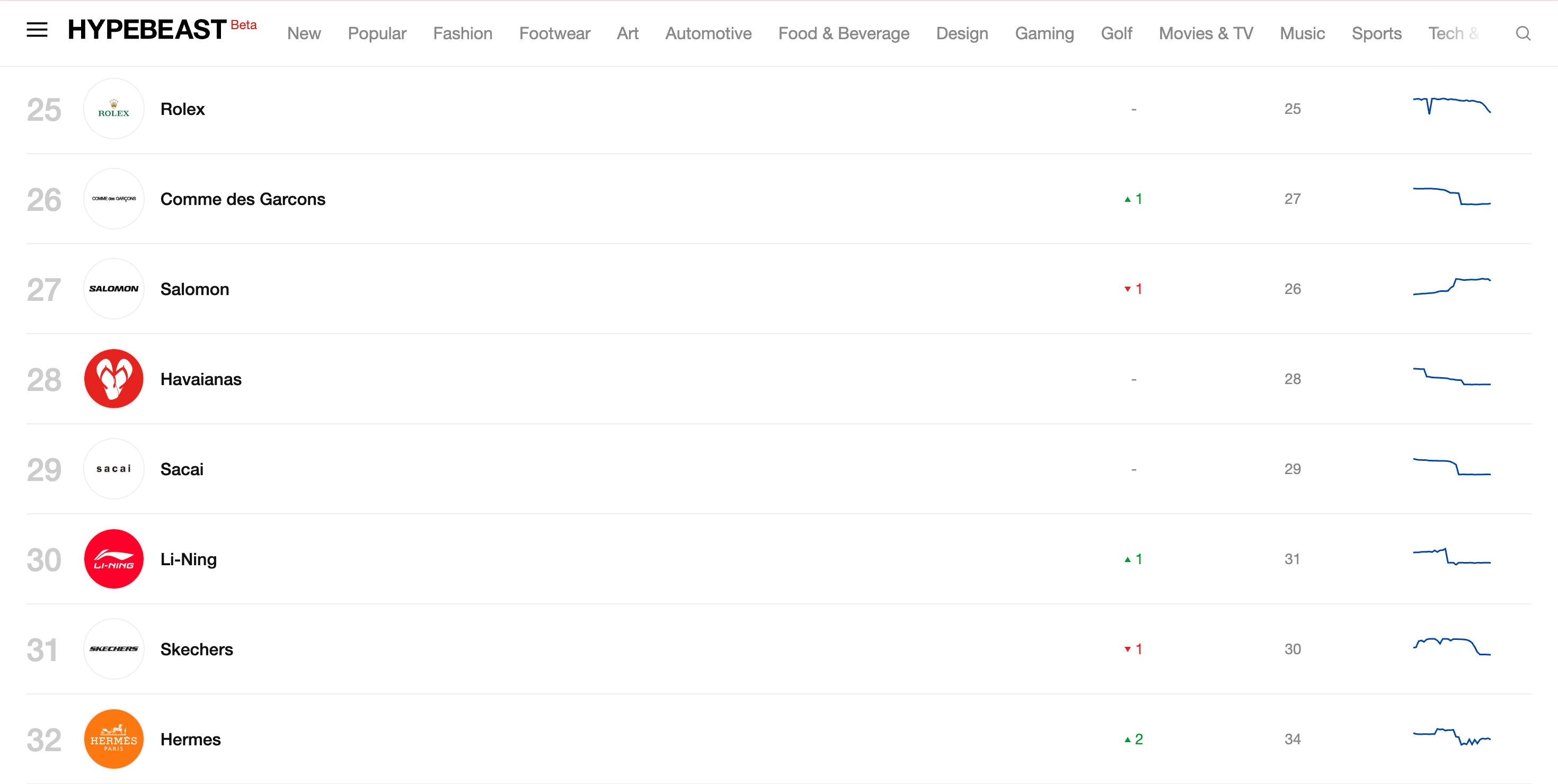
Salomon is one of the most respected brands in the outdoor community. It’s headquartered in Annecy, and over 79 years it’s earned a reputation for designing consistently high quality, reliable technical ski and trail gear. In 2018, it officially launched its Sportstyle range for more fashion-leaning consumers. It’s now normal to see the Salomon name at Paris Fashion Week, and at the time of writing, it’s the 26th most popular brand on Hypebeast’s Brand Index - just below Rolex and Comme des Garçons, and above Hermès.
But the question is, has pushing into fashion compromised its athletic credibility?
I’ve been through Amer Sports’ 248 page annual report and it gives one of the clearest examples of “understanding your consumer” I’ve read to date.
Before we get into it, I want to anchor this article on the idea of brand authenticity and how it makes it possible to enter a new market without alienating existing customers - and hurting the P&L.
I’ll be exploring how Salomon’s authenticity presents across its choices around collaborators and product designs, through to its physical store footprint. Even though it’s now as at home in Selfridges as it is in Chamonix, the brand has still maintained a relevance and consistency that’s validated by 35% growth, pushing sales past $2 billion.
Is Salomon independently owned?
Although Salomon started life as a family-owned business back in 1947, it hasn’t been independent since adidas bought it 50 years later - in 1997. Then in 2005, it was bought by Amer Sports, a sporting goods group headquartered in Helsinki, Finland. Amer then floated on the New York Stock Exchange and is traded under the ticker “AS”, though it’s majority owned by the Chinese sportswear group ANTA Sports.
But even though Salomon is part of a group and it forms a reporting cluster with Arc’teryx and Wilson, it still has genuine control over its own strategy, product and marketing. And while that makes it possible to keep each brand’s distinct look and feel, it also means that no single brand has to build its own distribution or other shareable infrastructure such as warehouses.
Being part of a group that has 703 owned stores across 40 countries, is how a brand can push into a new city-oriented fashion market while underwriting downside risk - the infrastructure is already in place, and Amer Sports’ own CFO has been explicit that “the strong financial position of Amer Sports allows us the flexibility to accelerate investments”
I’ll explain how this all feeds into protecting its authenticity a bit later, but we need to start by understanding what that “authenticity” actually is.
What is the origin of the Salomon brand?
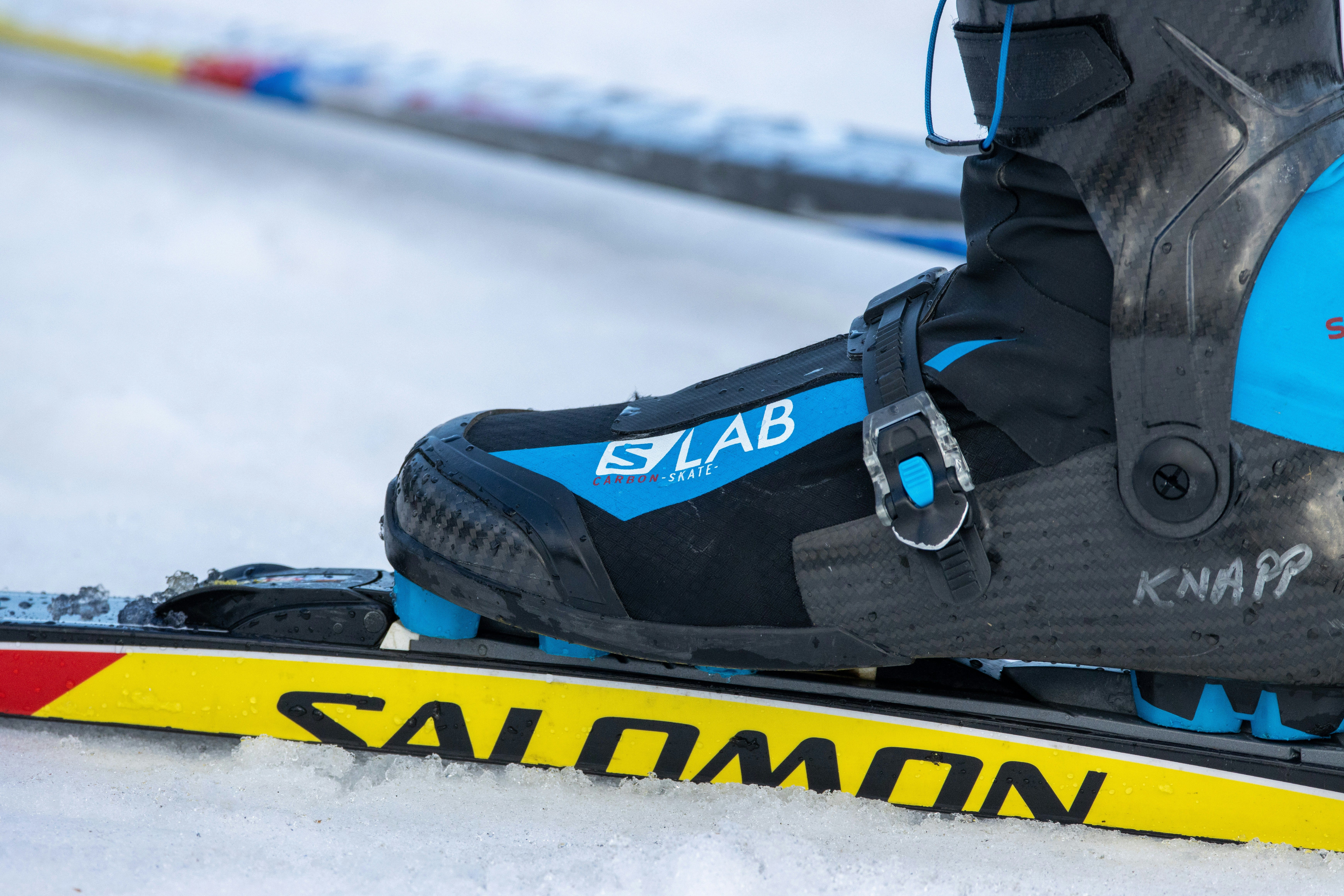
Salomon’s first products were about being dependable in moments when there was zero room for product failure, and I think that setting and holding that standard - and knowing that the cost of dropping it fell onto customers’ shoulders - sits at the heart of the brand.
These first products were ski bindings that were designed to release automatically in a fall - marketed to skiers as protection, under the line, “Your guardian angel”. Nearly eighty years later, the language has barely moved. Back in 2025, then Global Chief Brand Officer, Scott Mellin, told Forbes that authenticity is the thing worth protecting, which is why performance sits at the start of everything the brand makes.
And this is carried through, wherever and whenever the brand shows up - even in the city. In early 2025, the brand’s creative agency rolled-out a campaign that created the consistency and relevance between landscape and cityscape: “Invented in the mountains. Reinvented in Paris.”
This narrative was strengthened further when it opened its new Paris hub. In late 2025, Guillaume Meyzenq, President and CEO, called it a place where performance innovation meets cultural relevance, where technical heritage connects with contemporary lifestyle.
Have you started to notice a key part of how the brand has managed to both win over its original outdoor market and then do the same in the city? It’s all about understanding its environment, and the role it needs to play within that context. With ski bindings, and later trail gear, that role was about trust and insurance. In Paris, the role changes as it’s not about keeping someone safe anymore, it’s about letting them express a different side of who they are - whether that’s the same skier, off the mountain, or someone who’s never skied a day in their life and just wants a piece of that same credibility.
Is Salomon’s move into fashion hurting its outdoor positioning?
You’d expect the answer to be yes, at least a little, but it isn’t, and that’s testament to Salomon’s focus on understanding its role in any given environment then making sure it delivers. This shouldn’t be interpreted as personal opinion or conjecture, and we’re about to go through the commercial evidence that brings its brand authenticity full circle.
For transparency, you need to be aware that Amer Sports reports Salomon’s numbers in with a brand called Atomic - the latter being Amer’s specialist brand for alpine ski gear, bindings, boots, and helmets. But this actually makes sense, because the inputs aren’t a clean split - the brands often collaborate on R&D and manufacturing, and Salomon’s revenues are multiples of Atomic’s due to its lifestyle arm and more diverse outdoor offering.
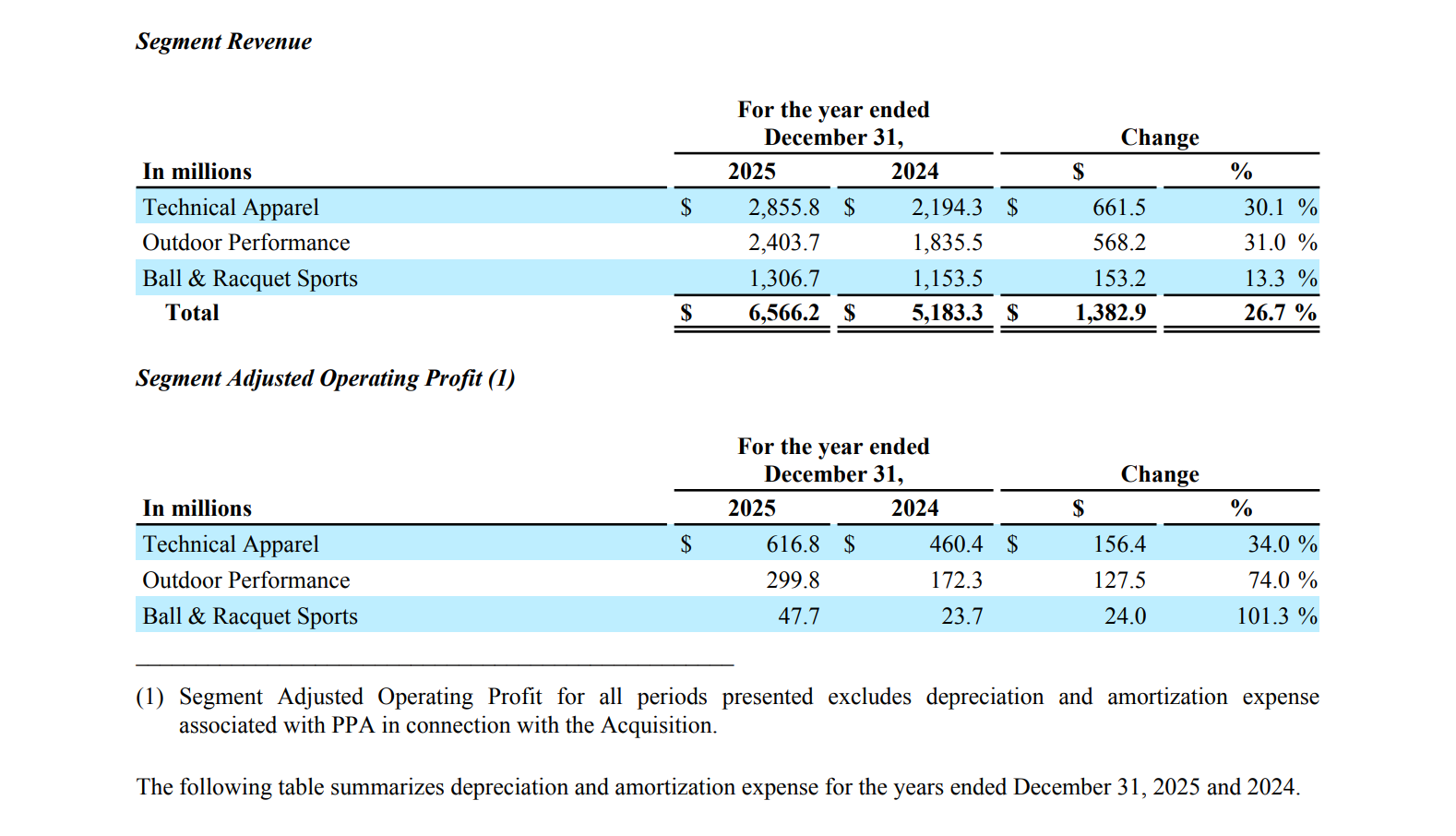
In 2025, this “Salomon and Atomic” Outdoor Performance segment grew revenue 31.0% to $2,403.7 million, and adjusted operating profit grew 74.0%, from $172.3 million to $299.8 million. Profit growing more than twice as fast as revenue is what happens when the mix shifts toward higher-margin products being sold in higher-margin channels.
It is footwear and apparel that are doing the shifting, and they account for 71% of the segment - up from 54% in 2022. This is then coupled with DTC revenue being up 62.2% against 18.4% wholesale growth. The margin tells the same story where Outdoor Performance’s adjusted operating margin lifted 3.1 percentage points in 2025, to 12.5%. And it’s risen even higher since the annual report, as by Q1 2026, Amer announced that Salomon’s momentum had pushed operating margin to 20.4%.
The buyer is genuinely changing, and Salomon is candid about it. It doesn’t try to pretend it’s purely for the mountains while supplying product to Selfridges. Cristelle Robert, Director of Global Product Management, has said plainly that the shoe hasn’t changed, but the buyer has. Skiing itself now accounts for under a tenth of Salomon’s sales, but there’s still a sizable 76% overlap between its performance and sportstyle.
Salomon’s move into fashion reads less like dilution and more like an extension - it’s the same idea, reaching a wider and often younger audience, in two environments where the brand has a defined role to play, and with a large share of that audience moving between the two.
Why is Salomon collaborating with fashion brands and artists?
By now, you get a sense of how Salomon approaches its brand and product experience - it’s less about coming up with a convenient story and trying to wedge in a product, and more about communicating an expression of the environment around the consumer, and intentionally designing a product that helps them get the most out of their interaction with their immediate surrounds. This commitment to creating the right product, for a specific environment, as an expression not a convenient story, also carries into the logic behind its collaborations.
If we look at its performance products, Salomon’s Annecy Design Center builds products directly alongside its own athletes, creating a level of relevance that you don’t get from a 2D briefing document. It’s seen in trail running, where Courtney Dauwalter’s fourth win at Hardrock 100 sits against the backdrop of her own Dawn to Dusk Collection, and for road, in Matthias Kyburz’s fifth place at the New York Marathon in a carbon-plated prototype running shoe. At the Milano Cortina 2026 Winter Games, Salomon outfitted 27,000 official staff and volunteers, while Amer Sports’ brands together sponsored around 250 athletes across the Games, who won 87 medals between them.
On the Sportstyle side, per the brand’s commitment to product-to-environment relevance, the names change completely - Maison Margiela, Carhartt W.I.P., and the Colombian artist FEID. Not one of them is an athlete because getting the Oxford Street context isn’t about creating a product for a different sport, it’s a different environment, and understanding it takes a different kind of expert.
I don’t think that’s an inconsistency. On a mountain, the signal a customer wants is competence - proof the gear holds when it matters. On Oxford Street, competence isn’t the signal being asked for; nobody buying a trainer there is about to test its grip on wet rock. What they want is cultural fluency and proof the brand understands where they actually are, not just where it came from. Salomon doesn’t try to sell the mountain in the middle of a city, but it brings a context-appropriate version of the same credibility instead, through a collaborator whose own name means something on that street. The mountain is still where the authority comes from, it’s just not what’s being sold there.
This is where Salomon’s physical stores pick up the same expression of the environment around the customer. Each store is a curated space, giving the customer a visceral, physical version of what the product already promises them in their immediate surroundings. And in a store, that interaction is physical and immediate, and what a customer feels in the room becomes the reason they buy.
How does Salomon decide where to put its physical stores?
In the past, Salomon ran campaigns that centre on the idea that adventure is everywhere - the multi-year “CITYTRAIL” program which roughly spanned 2014 to 2017 - emphasised that a trail runner’s appetite for exploration could be satiated by the twists and turns of a cityscape.
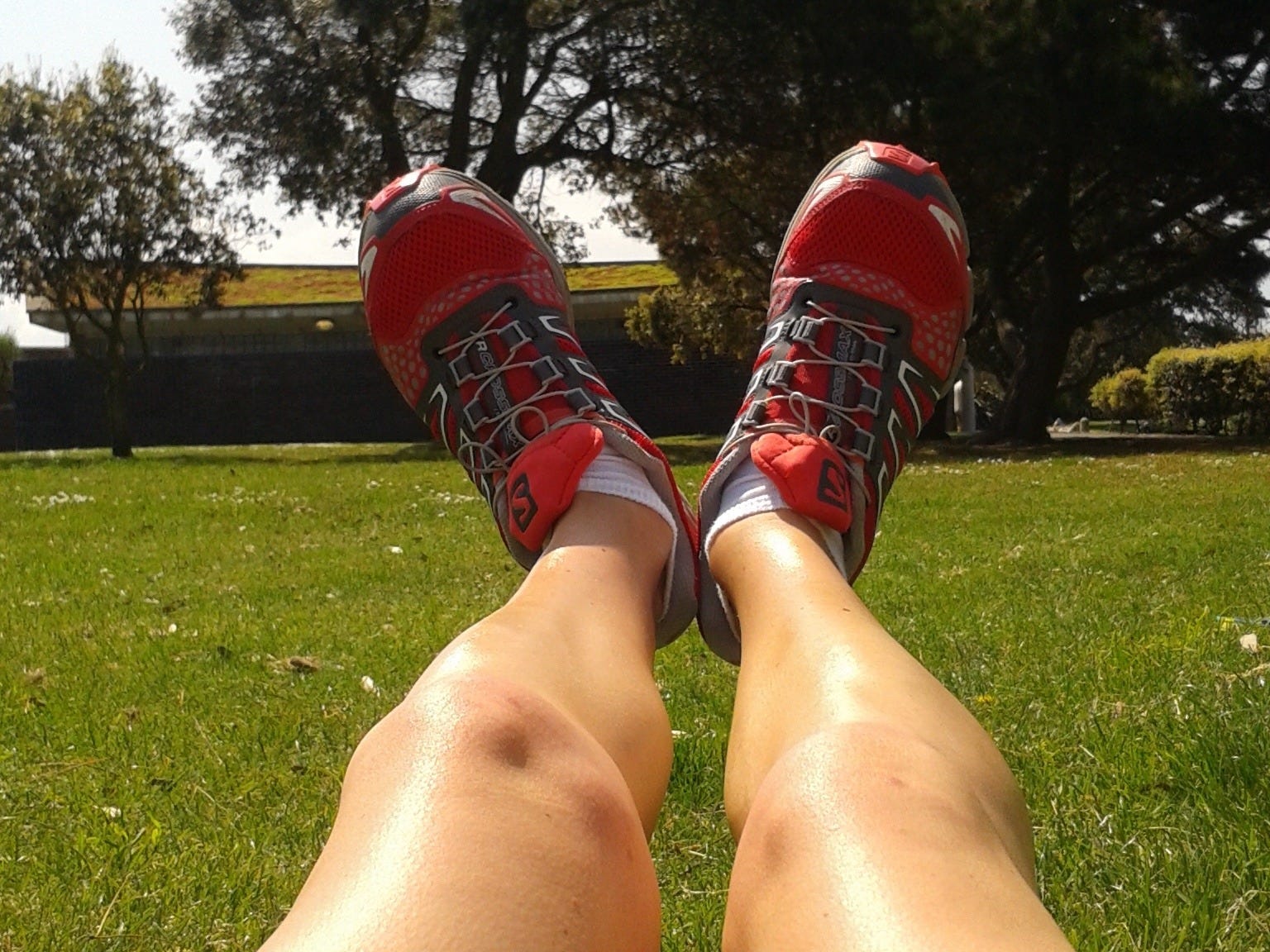
Salomon’s physical stores are where that appetite for adventure is activated in new customers or nurtured in existing Salomon customers, and made possible via product. And it determines the brand’s store expansion in the same way it guides product and partners - all based on environmental context and expression.
Steve Doolan, President and GM of the Americas, has described “Epicenter” cities as places with a specific dynamic of culture and creative energy, such as New York, Los Angeles, Paris, Milan, Tokyo, Shanghai, Mexico City. They’re where the brand’s characteristics - and therefore customer relevance - can be dialled to the maximum. There are also some cities that don’t make the list as an Epicenter city, but that do have a role to play as a community “hub” where customers can discover product, grab a coffee, riff with other local runners - find people that think like them, with the brand being the broker for the relationship. Doolan named Chicago, San Francisco, Seattle and Miami as examples.
There’s a familiar echo here of Salomon’s one-time owner, adidas. I visited adidas’s own Berlin Runbase in 2016, and the brand has kept building on the same idea since - its Adizero House of Fast in Dubai, launched this January, is the same community-hub instinct in a different city. It’s a shared understanding of what a physical space is actually for. Yes it’s a place for distribution and to move stock - this is a business after all - but that comes from making the brand real to the runners already closest to it, and to then let that credibility travel outward and convert to sales from there.
Salomon’s own team has explained how this rolls-out in SoHo which is home to “a fashion-driven customer” - they get the Sportstyle range whereas the Upper West Side store gets hydration vests for a running crowd who’s nearer Central Park.
That instinct for place sits on top of the fastest-growing part of the business for Amer Sports more broadly - Greater China - where revenue grew 43.4% in 2025. This region is where investors will be watching, as it’s now sitting at $1.86 billion in annual revenue, and Asia Pacific as a whole grew 50.7%. It makes sense that Salomon, where its value as a growth driver is being repeatedly brought to the fore in Amer’s financial announcements, has around 35 new stores planned for Greater China in 2026 alone. And everything’s still built around the founding concept of creating reliable, contextually relevant products - hence authenticity being the core of the brand’s business success.
Did Salomon change its shoes to make them more fashionable?
No, and this is almost as if Salomon’s making it clear that there’s absolutely no way it’s sold out to chase revenue. The Sportstyle XT-6 is, construction for construction, the same shoe as the trail version - reviewers confirm the model has never been altered, even down to the outsole pattern that made it a trail favourite in the first place.
This commitment to its actual-not-aesthetic utility - its authenticity - is both a strength and a cost it accepts. The outsole of trail shoes is softer than road shoes, or lifestyle shoes, because the compound is built to grip loose ground. This means that on hard pavement, it wears down faster than a dedicated street shoe would. I saw this first-hand in retail with the Speedcross, where we were selling into a more mixed, road-leaning running crowd rather than purely trail customers.
A brand that only wanted to look the part could have engineered that problem away with a harder, city-specific sole. Salomon left it as it was, because changing it would have meant the shoe’s technical construction - its applied utility - stopped being the thing it’s actually selling. That’s not a shift Salomon is willing to make, whatever it might cost in wear-rate complaints from customers who’ll never take the shoe near a mountain.
What can other brands - big or small - learn from Salomon’s approach to business?
I’ll finish with what any business, whatever its size, can take from how Salomon protects its authenticity while entering new markets. It’s informed by everything researched for this piece, and over 16 years spent in the market.
It comes down to discipline, and knowing which parts of your character to dial up or down in a given room, without ever changing who you are underneath it. Your character stays the same - it’s the expression that adjusts, to the place, and to the person standing in front of you. Don’t let a single decision drift away from that, even when drifting would be easier, or cheaper.
Frequently asked questions
Who owns Salomon?
Amer Sports - majority owned by a consortium led by Chinese sportswear group ANTA Sports.
What percentage of Salomon’s sales now come from skiing?
Under a tenth - footwear and apparel make up 71% of its segment’s revenue, up from 54% in 2022.
How many stores does Amer Sports operate, and why does that matter for Salomon?
703, across 40 countries - it’s shared infrastructure that Salomon draws upon without having to build its own.
Is Salomon now classed as a luxury brand?
No. Despite collaborations with houses like Maison Margiela, its pricing sits in premium streetwear, not luxury, and it stays in mass retail channels.
This content is produced for informational purposes. It does not constitute specific business, commercial, or investment advice for any individual organisation.