Strong Brand Strong Business
The cold-water discipline that built a 54.8% margin
Finisterre grew from £6.7M to £26.6M at 54.8% gross margin. The architecture of integrity underneath it - and the wholesale test now underway.
Back in 2003, UK surf shops sold the Hawaiian dream. Billabong boardshorts, Quiksilver graphic tees, and products built for 26°C oceans and sun-drenched beaches being sold to people surfing in 8°C water getting changed in car parks. Sure, O’Neill’s Psycho series of wetsuits was technically rated for cold water, but for the UK surfer it came with practical trade-offs: a warmer wetsuit meant thicker neoprene which meant reduced flexibility, and the seams weren’t as durable as those on the thinner wetsuits.
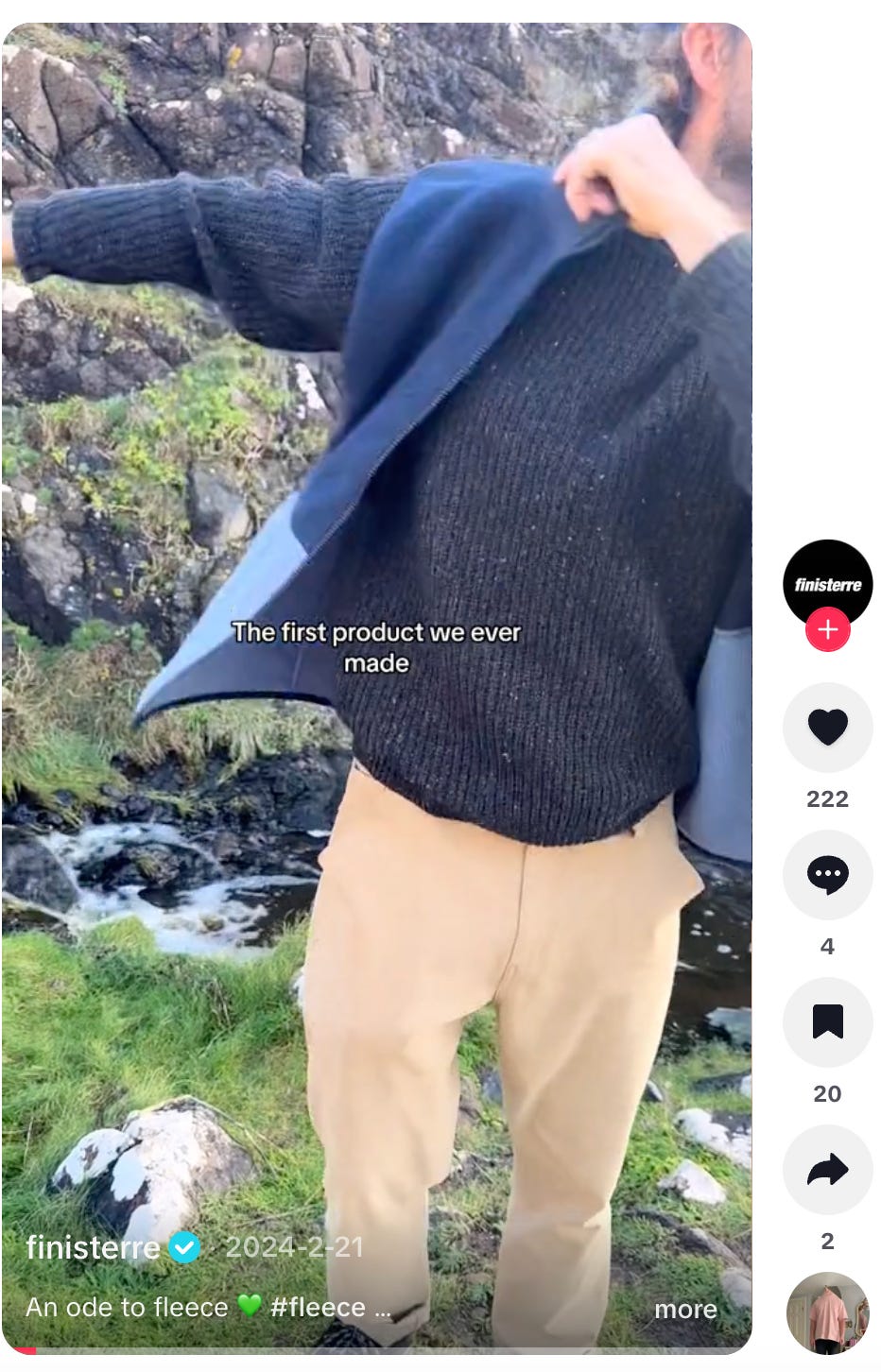
Enter Tom Kay - a surveyor, based in London, pining for a life built around the sea. He moved to Cornwall and started building a surf brand for the conditions that actually existed. His first product was a windproof, waterproof fleece, made in Devon. The brand’s name - Finisterre - came from his childhood, listening to the shipping forecast in the back of his parents’ car, imagining “tiny boats miles from land bravely making headway into mountainous seas.”
The latest financials, published in 2025, show that Finisterre has grown to £26.6M revenue, while trading a 54.8% gross margin. The latter is what prompted my interest - it’s the kind of margin you more often see in businesses ten times the size, where volume starts to compress costs across purchasing, manufacturing and operations. I wanted to understand what was underneath it, which brings us to this article.
What problem did Finisterre solve - and how did it know it was worth solving?
Kay founded Finisterre to solve a technical problem UK surfers were having to weather (literally).
The dominant surf brands were selling products built for a lifestyle that UK surfers didn’t live. For context, the leading surf brands were based in Australia and the media came out of Hawaii. Hawaii’s waters sit at 26-29°C year-round, while Cornwall peaks at 15-18°C in a good August and is nearer 8-10°C in winter.
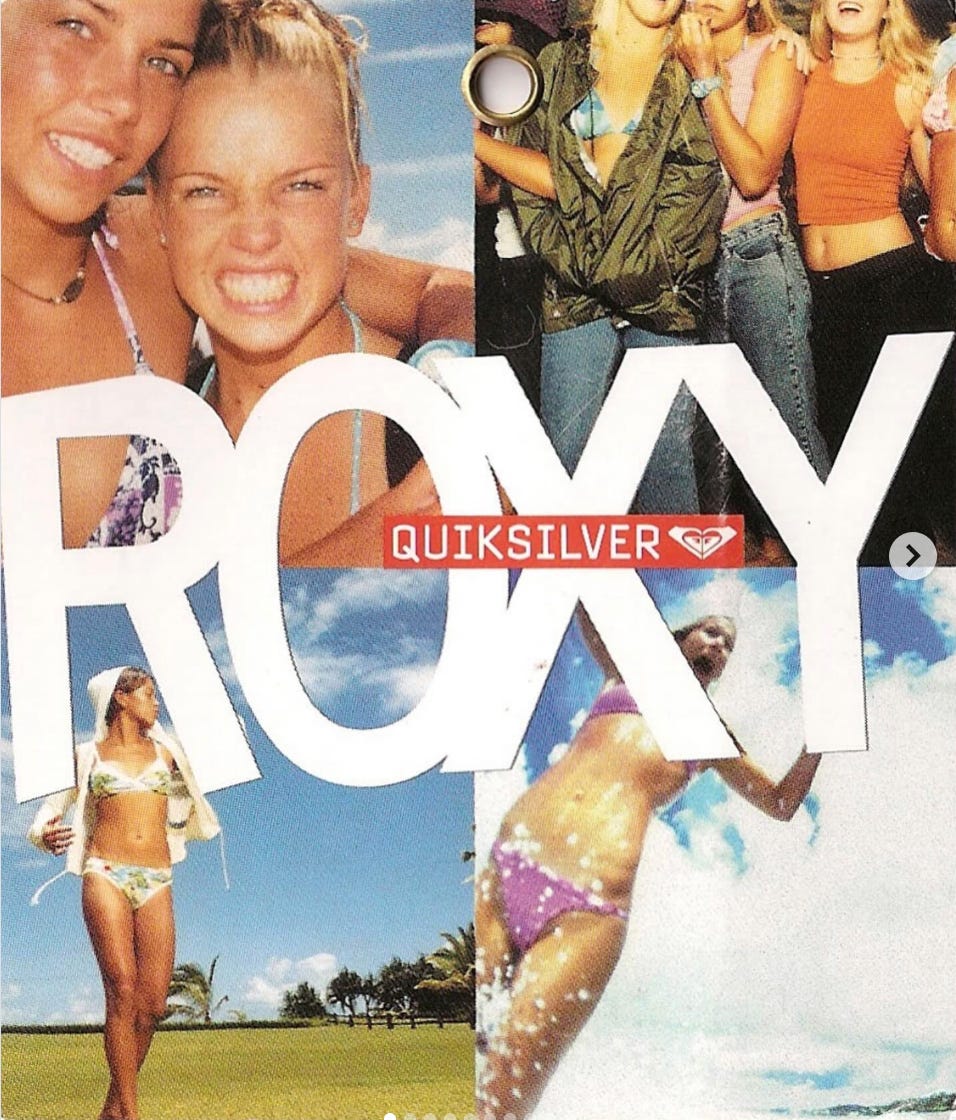
But as much as this created a gap between what was on offer and what UK surfers needed, from a business level it was only worth addressing if there was a market in it.
Surf participation was growing at 12-15% per year through the early 2000s. Blue Crush hit cinemas in 2002 - a film that commercially brought surf culture to a female audience in a sport that remains predominantly male (I can attest, first hand, that the “Y2K surfgirl” trend was a thing) . For anyone wanting to start a surf brand for an unserved community, the opportunity was both real and sizeable.
Twenty-plus years later, Finisterre’s founding focus is still showing up across its whole system of brand, product, and commercials. From the Cornwall imagery and the RNLI partnership - Tom Kay has been a volunteer helm at the St Agnes lifeboat station since the brand’s early days - to the BCorp status, to products built for UK coastal conditions, and even to their names which continue the cold-water narrative.
The clearest example if the product names is the Nieuwland wetsuit, which takes its name from Father Julius Nieuwland. Quick history lesson is that he was the priest-chemist whose 1920s research led to neoprene’s development. The brand has since replaced neoprene in the range with Yulex natural rubber, but honoured the chemist whose initial material set the path for that ongoing technical development.
Finisterre Unit Economics: Customer Acquisition Costs (CAC) and Retention
The previous Brooks Running edition of Strong Brand Strong Business made the case that focusing on a specific user will produce unit economics that general brands can’t replicate. Finisterre proves the same case at a different scale, and in a different category.
Two figures from its 2019 Crowdcube prospectus tell you what building a brand around genuine need creates, in terms of financial health:
a 57% repeat revenue rate in 2021 and,
a sub-£20 CAC in 2019.
Granted, both are historical and neither has been updated publicly, but the filed accounts show a margin that keeps widening. Plus, only 24 products in the current clearance section (verified May 2026) suggest careful stock management. On this point, it’s also worth noting that Finisterre uses dedicated outlet stores to prioritise main channels for full price products (read: full margin).
The logic of locking onto CAC and repeat rate as a duo is that it’s how you can determine whether a brand is buying growth with discounts and papering over churn. If CAC is rising while repeat rate is flat, aspiration has replaced utility somewhere in the model - the products don’t live up to what brought the customer in. Finisterre’s repeat revenue rate, CAC and margin trajectory say that isn’t happening here.
How did Finisterre build a community that co-owns the business?
In 2019 Finisterre did a crowdfund, raising £2M in 30 minutes from approximately 2,000 investors. Another round in 2022 raised £4.6M from over 3,000 investors - 307% of the target. It was led by Active Partners - behind Rapha and Soho House (worth noting that there are also brands built around genuine community rather than broad-market acquisition). 27% of the business is now community-owned via the B share class. A significant portion are existing customers who backed the mission with money as well as their wallets.
The Finisterre Foundation C.I.C. is asset-locked by statute. i.e. its assets cannot be distributed to shareholders. Most brands would put this on the homepage, but Finisterre puts it in the footer, nested under their Company dropdown. The CIC is the legal mechanism that makes the environmental commitment binding rather than voluntary - it signals that its purpose is embedded in its structure, and it’s not a superficial marketing ploy.
What are Finisterre’s stores doing - and what does their hire of Superdry’s ex-Head of Retail signal?
I’ve been to Finisterre stores in Bristol, Bath, Exeter, Cambridge and London. In every one, there’s been a conversation happening about what someone had done outside recently - even in land-locked, zero-surf Cambridge.
These conversations are part of Finisterre’s community glue. They happen between staff and customers, customers shopping together, and even customers not shopping together. The stores - by my assessment - are used first and foremost to confirm belonging, rather than being a pure conversion play.
Physical stores can create tension for brands that start their lives as online-only businesses - customers aren’t clicking their way through your store, so it’s harder to get data insights. But Will Sheane, CEO, has stated publicly that Finisterre’s Shopify infrastructure - POS across all stores from April 2023, integrated with Ometria - gives the boardroom cross-channel visibility. In-store teams offer to send receipts by email, making it easier for HQ to measure how customers have hopped across channels, and ended up in store, buying a certain product. All useful information to adjust digital and in-store merchandising, comms flows, and even partnerships and brand adjacencies.
Speaking of physical stores, in January 2026, Finisterre hired Joe Ward as head of retail from Superdry. He’d spent 18 years at a brand whose own filings describe years spent trying to exit loss-making stores, closing 12 in a single half-year period. Clearly he’s been neck-deep in the numbers for a long time, making him a shrewd hire for a business built on financial discipline.
What do Finisterre’s financials actually show?
All figures from the Finisterre UK Limited Annual Report, year ended 31 March 2025, and Fitzroy Apparel Limited consolidated accounts, both filed Companies House 29 July 2025.
Finisterre FY25 Financial Performance
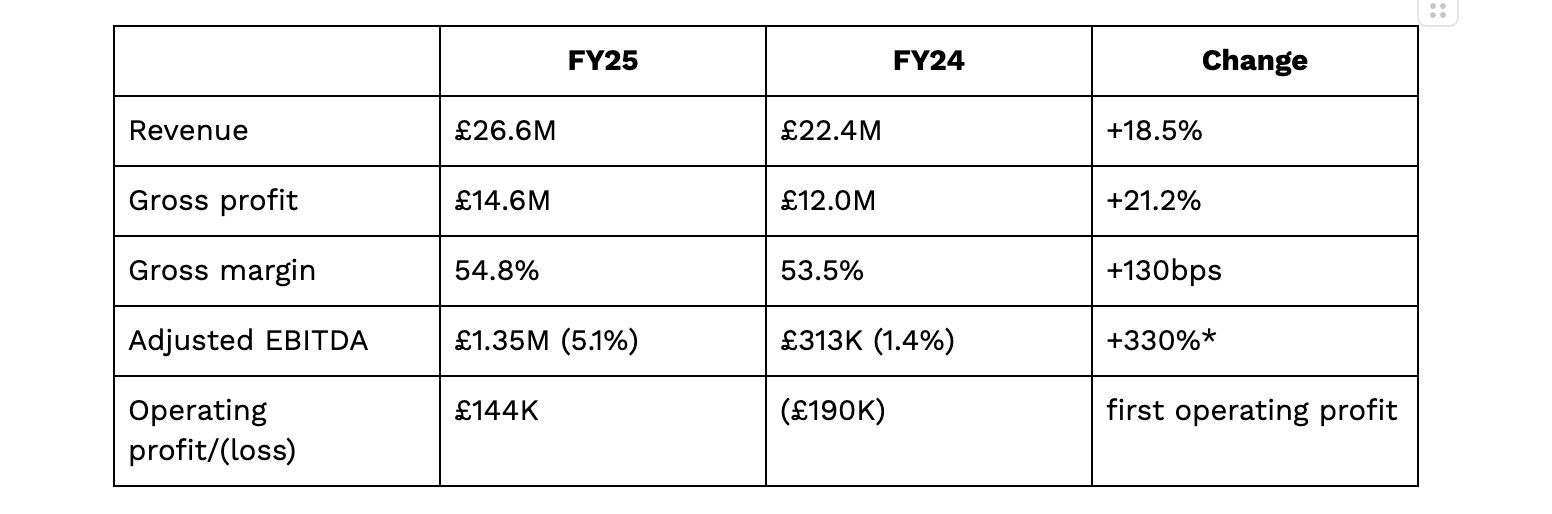
*The 330% EBITDA headline includes a non-cash £565K uplift from early FRS 102 lease adoption - an accounting reclassification that boosted EBITDA but added higher depreciation and interest charges further down the statement, reducing pre-tax profit by £140K. Strip that out and underlying performance delivered 150% growth from £313K to £782K. It also reported its first operating profit on a clean 12-month basis: £144,533.
Revenue has grown from £6.7M in 2019 to £26.6M in FY25 - a 26% CAGR over six years, verified from primary sources. One accounting note: FY23 covers 15 months, not 12, because Finisterre extended its accounting period. Annualised, that’s approximately £19.2M, making FY24’s £22.4M genuine growth of approximately 17% on a comparable basis.
Gross profit grew 21.2% on 18.5% revenue growth. The directors describe the result as reflecting “continued strength in full price trading, and improvements in supply chain efficiencies” - in a signed statutory document.
Cash stands at £5.28M, with directors confirming £5.3M in headroom. This is important for two reasons: resilience against the supply chain disruption running through the sector right now, and the wholesale inventory build is fundable without leverage risk - it can commit to stock before retailers pay without straining the balance sheet.
Are Finisterre about to trade their margin for scale?
There’s one area for concern in the 2025 financial statements. Inventory grew 43.9% while revenue grew 18.5% - and write-offs increased from £36K to £86K year-on-year. The directors are pushing forward regardless: “We will accelerate growth in the year ahead as we further develop our international footprint and wholesale as a distribution channel.” The business isn’t compromising its cash position to do this - expansion is being financied via a £1.5M trade finance facility which is set to expand to £3M post year-end.
The more interesting question is whether the brand-product connection can be sustained when Finisterre doesn’t control the narrative - it’s the age-old DTC to wholesale “brand protection” conversation.
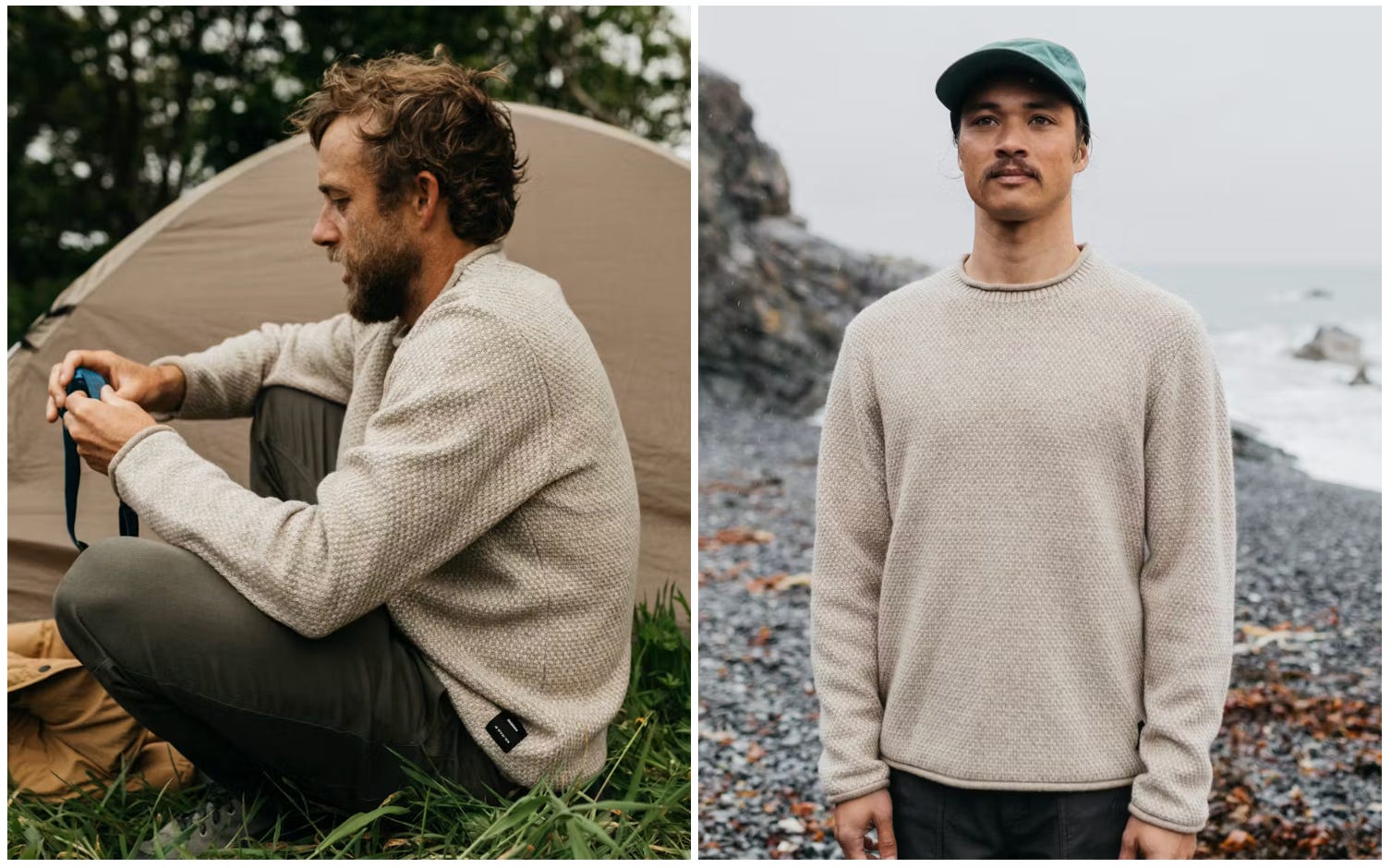
Huckberry shows how Finisterre’s story can be upheld, even when it isn’t hitting publish. For background, Huckberry is an editorial retailer with a media arm, widely regarded for being a safe-bet for brands wanting considered curation. Its own product copy for the Barents rollneck introduces Finisterre’s brand context to an already-aligned audience:
“Finisterre named this sweater after the Barents Sea - a notoriously cold stretch of water bordering the Arctic Ocean. It goes without saying it’s built to handle serious chill. It’s a heritage-inspired knit constructed with a thick, textured fisherman’s stitch that’s become a favorite in the Finisterre community. Combining soft wool with recycled polyamide, this rollneck maintains its shape and structure for years to come.”
Finisterre, Barents Rollneck Sweater, Huckberry
Holding this standard across all wholesale accounts will be an imperative for maintaining the brand strength that translates into pricing and upholds that margin.
What we’ll be able to see publicly is whether Finisterre products start appearing as a fixture in retailers’ clearance sections, or whether product mix drifts toward lower price points to meet higher volume wholesale requirements.
What can any brand-led business take from the Finisterre model?
Finisterre’s 57% repeat revenue rate, sub-£20 historical CAC and 54.8% gross margin on a 26% six-year CAGR are the results of one decision: build for the person already in cold water, already experiencing the gap, already needing your solution.
Finisterre is at an inflection point that hits brand-led businesses when they’re making moves to scale. It’s where the founding discipline either gets codified into the operating model, or it gets negotiated away one commercial decision at a time.
But Finisterre has built accountability into its architecture. There’s 27% of shareholders who are customers, a CIC foundation embedded in law, wholesale partners who extend the brand narrative rather than dilute it, and its BCorp status to uphold.
When the pressure to expand arrives - more accounts, broader range, adjacent markets - what have you baked into your business as non-negotiables?
What was the founding connection point between your brand and community?
And how are you holding yourself to account against your founding principles to make sure you don’t sell out as you scale up?
Remember that culture changes with leadership and commercial cycles, but architecture is harder to negotiate away.
Strong Brand Strong Business is published for founders, CMOs, and senior operators in brand-led businesses. Every edition examines a brand building something that lasts - and what the rest of us can learn from how they do it.
Content is produced for informational purposes. It does not constitute specific business, commercial, or strategic advice for any individual organisation.