Strong Brand Strong Business
99.996% of Customer Experience Goes Unoptimised
Why eCommerce brands are optimising the wrong moments — and what Molton Brown shows us about where value really lives
For eCommerce brands selling physical products, there’s an uncomfortable truth we don’t talk about enough:
Almost all customer experience happens after checkout — and almost none of it is measured.
In fact, when you map it properly, digital experience accounts for roughly 0.004% of a customer’s lived relationship with a product. The remaining 99.996% unfolds offline — in homes, routines, bodies, senses, and habits.
Yet this is precisely where most brand value is created.
Today, as AI and automation rapidly optimise the tiny slice of experience we can measure, the risk isn’t that brands will over-invest in digital. The risk is that they’ll optimise brilliantly — but in the wrong place.
This article is about that imbalance, why it matters commercially, and how Molton Brown gets it right.
Digital matters — but it isn’t the experience
Let’s be clear: this is not an anti-digital argument.
Search, marketplaces, DTC platforms, ChatGPT discovery, Shopify, Amazon — these are all critical enablers of modern commerce. They shape discovery, consideration, trust, and conversion.
But they are enablers, not the experience itself.
The physical product is where customers ultimately judge whether a brand kept its promise — on quality, performance, pleasure, value for money, and repeatability. That judgement happens slowly, repeatedly, and mostly invisibly. Yet many eCommerce brands behave as if the funnel is the experience.

Even Shopify sees the gap — but only part of it
Interestingly, even Shopify recognises that experience doesn’t stop at the screen.
Its Winter 2026 Editions highlighted renewed focus on physical POS: smoother in-store checkout, more reliable hardware, better tools for merchants operating in the real world. That matters — and anything that helps merchants understand engagement beyond the browser is a step forward.
But let’s be precise about what this captures.
POS improvements tell us about transactions, not lived experience. They still measure minutes, not months. They track interaction with the merchant, not interaction with the product.
What happens after the bag is taken home — in someone’s shower, kitchen, wardrobe, training routine, or daily rituals — remains largely unmeasured, unoptimised, and strategically underweighted.
The lens: experience lives between transactions
Across 15+ years in eCommerce — spanning sport, retail, beauty, and nutrition — I’ve seen this pattern repeat:
In sport, value shows up in performance gains, comfort, identity, and confidence over time.
In nutrition, it reveals itself through taste, digestion, routine fit, and how someone feels hours later.
In beauty, it’s tactile, sensory, ritualistic — repeated daily, often for years.
The most valuable moments are rarely linear, almost never attributable, and sit between transactions.
This is the critical distinction many brands miss:
Your discovery and revenue channels are not your experience channels.
Brands that forget this end up optimising the wrong moments.
Which brings us to Molton Brown.
Molton Brown: where 0.004% meets 99.996%
Molton Brown is one of the best brands I’ve come across for understanding where experience — and therefore value — actually lives.
For context, I’ve been buying their Relaxing Ylang Ylang products for nearly a decade. I typically buy online, so this is a pure eCommerce example.
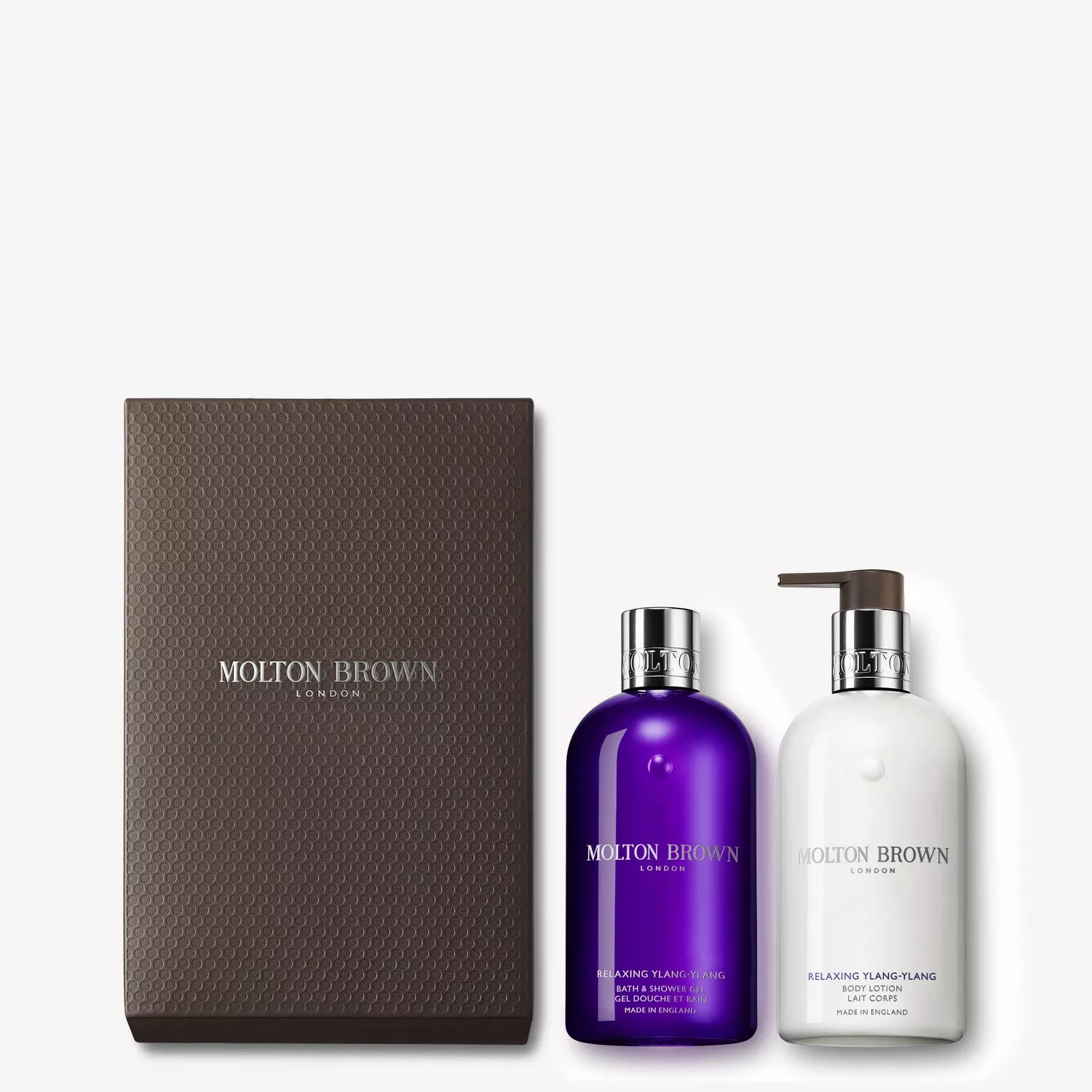
Here’s what my digital experience looks like:
Google price check across DTC and retailers: ~30 seconds
Browsing Molton Brown’s site (often spotting something new): ~5 minutes
Checkout: ~1 minute
Total digital experience: ~6–7 minutes
Now compare that to the product itself, where a single bottle lasts around three months, and I use it once or twice a day. Each use is about 15 minutes, though the fragrance lingers well beyond that — so it’s become part of my routine and has an ambient sensory presence.
That adds up to:
Direct use: 30 minutes/day × 90 days = 2,700 minutes
Ambient sensory presence: 24 hours/day × 90 days = 129,600 minutes
Put side by side:
Measured digital experience: ~7 minutes
Lived product experience: ~132,300 minutes
Digital touchpoints represent ~0.004% of the total experience.
This is the blind spot.
Why this matters commercially — especially now
When margins tighten, the easiest place to cut is often the product itself: thinner formulas, cheaper materials, diluted fragrances, reduced durability.
On a spreadsheet, it looks sensible. In reality, it’s where brands quietly erode the 99.996% of experience that actually drives loyalty, repeat purchase, and price resilience.
Digital touchpoints are seductive because they’re:
measurable
scalable
defensible in boardrooms
AI and automation slot neatly here — optimising flows, attribution models, chat, and efficiency. Physical experience is harder:
slow to reveal impact
difficult to quantify
resistant to A/B testing
You can’t easily measure “ritual satisfaction” in GA4. You can’t attribute repeat purchase to scent longevity. But customers feel it — and they respond accordingly.
People return because a product earned its place in their life — not because a funnel was optimised.
Total Experience Time: a more useful lens
A practical way to rebalance decision-making is to think in terms of Total Experience Time.
Every brand experience has two components:
Digital experience (minutes)
Discovery, browsing, checkout, post-purchase comms.Physical experience (weeks, months, years)
Frequency of use, habit formation, sensory engagement, long-tail desirability.
Brands that over-optimise the transaction win short-term efficiency. Brands that protect and elevate lived experience earn resilience — even as discretionary spend tightens.
This is how Molton Brown sustains pricing power and loyalty in a crowded market.
Why Molton Brown gets it right
Molton Brown’s digital channels do their job well: they set expectations, tell stories, and make purchasing easy.
But the heavy lifting is done by the product.
Consistency of formulation, depth and longevity of fragrance, and the creation of repeatable rituals ensure the experience remains rich long after checkout. Even their in-store moments — complimentary hand massages, tactile discovery — reinforce value without relying on conversion.
These moments are hard to measure. That’s precisely why they’re defensible.
For brands embracing AI and automation, the lesson is clear:
Use technology to streamline the measurable — never to compromise the unmeasurable.
What to take away
You don’t need to abandon digital optimisation — that would be reckless. But you do need to widen the frame.
Ask:
How long does this product actually live with a customer?
How often does it intersect with their body, home, or identity?
What happens to perceived value if we shave quality to fund acquisition?
As AI accelerates efficiency in commerce, strategic advantage will come from protecting the parts of experience that technology can’t replace.
Never risk the physical experience that ultimately drives loyalty. And if you need alignment internally — this is the conversation worth having.
If you want help working out where tech-driven efficiencies make sense — and where human and product investment must be protected, I work as a fractional eCommerce and commercial advisor, helping brands build profitable, resilient commerce systems during growth and change.
You can find me on LinkedIn — or reach out directly.